
Portugal Golf: A Complete Travel Guide
For years, I confidently recommended Costa del Sol in southern Spain to clients looking for European golf. Portugal? It always came up in conversation, but I'll be honest: I wasn't comfortable selling a destination I hadn't personally experienced. That changed recently when I finally made the trip, and what I discovered was a golf destination that completely stands on its own.
Here's what sets Portugal apart: while Spain's golf tourism concentrates heavily in the south, Portugal spreads exceptional golf throughout nearly the entire country. From Lisbon and the Silver Coast down through Comporta and into the Algarve, each region delivers its own personality and golfing character. But this isn't just about the courses, though several rank among the world's top 100 and feature designs by legendary architects. Portugal operates as a complete golf vacation rather than just a golf trip.
The country has over 70 quality courses spread across dramatically different landscapes and microclimates. You can build an itinerary around pure golf if that's your priority, but you'd be missing what makes Portugal special. Wine culture here goes back centuries, Portuguese cuisine deserves far more recognition than it receives, and the infrastructure is excellent with English widely spoken throughout. The compact geography means you can drive from Lisbon to the Algarve in about three hours, making multi-region itineraries entirely feasible.
After years of confidently recommending Spain while hedging on Portugal, I can now speak from experience: Portugal deserves its own conversation, not a comparison. The golf matches anything you'll find on Costa del Sol, and the culture, food, and wine create a richer overall experience than most dedicated golf destinations deliver.
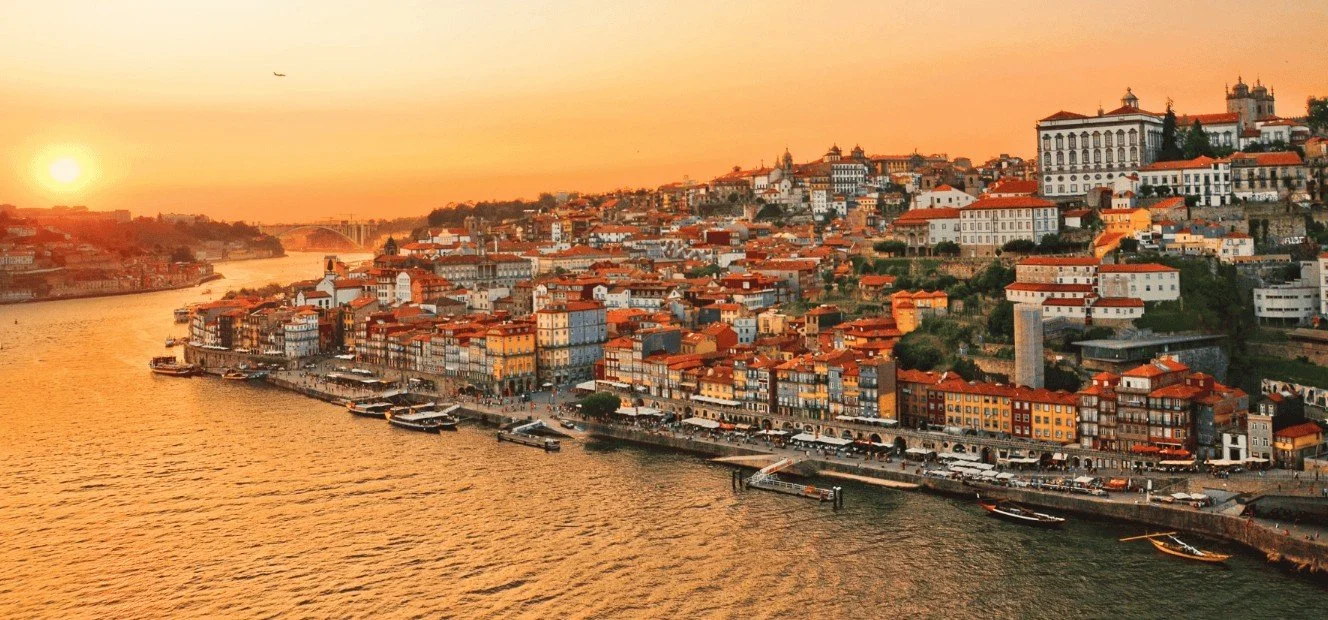
Lisbon Portugal at Dusk
Getting There
One of Portugal's biggest advantages is accessibility. The country has main airports that serve its golf regions, and understanding which one to use will depend on your itinerary.
Lisbon Airport (LIS) is where most travelers will fly in and out. It's Portugal's largest international hub with direct flights from major cities worldwide, including numerous options from the United States. Lisbon serves as the ideal base for exploring the country's golf regions: you can access the capital area, head south to Comporta, north to the Silver Coast around Óbidos, or even continue down to the Algarve. The airport is modern, efficient, and well-connected.
Faro Airport (FAO) is your gateway if you're focusing exclusively on the Algarve. Located right in the heart of southern Portugal's golf region, Faro makes accessing Algarve resorts incredibly convenient. While European cities offer extensive direct flight options to Faro year-round, seasonal direct flights from the United States are available during peak travel periods, making it a viable option depending on when you're traveling.
The infrastructure between regions is excellent, with well-maintained highways connecting all areas. This makes multi-region itineraries entirely feasible if you want to experience different parts of the country during one trip.
Portugal's Regions
The Algarve - With over 40 courses concentrated along the southern coast, the Algarve offers the highest density of quality golf in the country. But golf is just one part of the story here. The region maintains reliably sunny weather even during winter months when northern Europe is dealing with harsh conditions, making it a year-round destination.
The Algarve coast stretches for miles with dramatic cliffs, hidden beaches, and fishing villages that have maintained their character despite development. Popular hubs include Vilamoura, with its glamorous marina lined with restaurants and bars overlooking luxury yachts, Albufeira with its old town charm, and Quinta do Lago, known for its upscale atmosphere.
The food scene focuses heavily on seafood: grilled fish, cataplana (seafood stew), and percebes (goose barnacles) are regional specialties. The dining ranges from beachside grilled sardines to Michelin-starred establishments. The region has also developed a strong wine presence, with local varieties gaining recognition beyond Portugal's borders.
This is where you'll find luxury resorts, established golf infrastructure, and championship courses that have hosted numerous professional tournaments. The Algarve combines serious golf with a full resort experience.
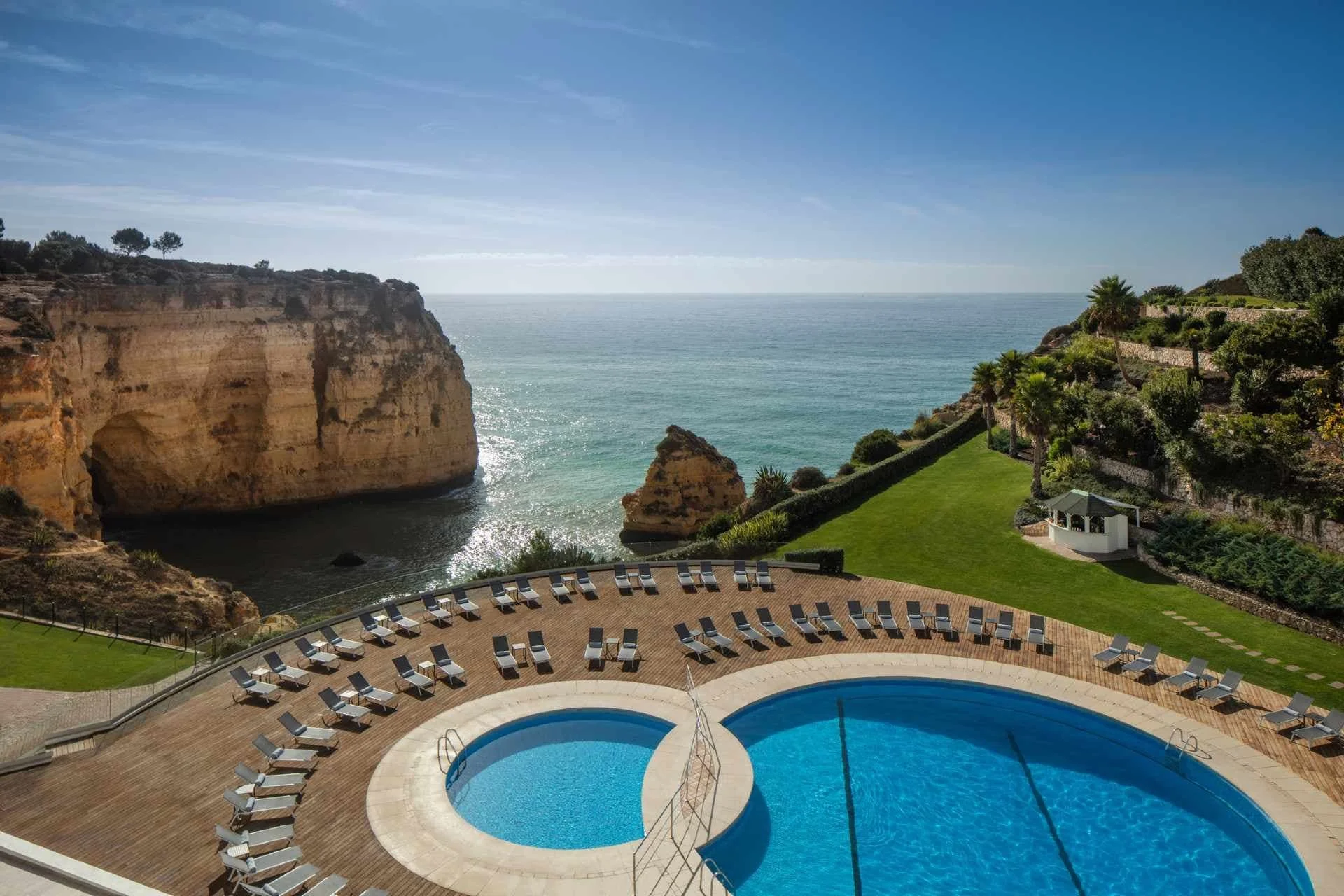
Tivoli Carvoeiro Algarve Resort
Lisbon & The Silver Coast - Lisbon is a world-class capital that gives you something most golf destinations cannot: a genuinely vibrant city experience combined with exceptional golf just outside the urban center. The neighborhoods each have their own identity. Alfama with its narrow streets and Fado music echoing from tascas, Bairro Alto's nightlife energy, Belém's riverside monuments and the famous pastéis de nata.
The food scene in Lisbon runs deep. Family-run tascas serve petiscos (Portuguese tapas) and traditional dishes that have been perfected over generations. The seafood markets showcase the day's catch from the Atlantic. Modern Portuguese cuisine has also exploded here, with several Michelin-starred restaurants reinterpreting traditional flavors.
Within 30 minutes of downtown, you'll find championship golf. The Silver Coast extends north of Lisbon along the Atlantic, and this is where some of Portugal's most dramatic coastal golf exists. The medieval town of Óbidos, with its castle walls and whitewashed houses, sits about an hour north of Lisbon and provides a cultural anchor for this region. The area combines scenic parkland and links-style courses with authentic Portuguese towns that haven't been overtaken by tourism.
The region works well for those who want to split their time between urban exploration and golf, or for non-golfing partners who prefer city activities while you're on the course.
Comporta - Located south of Lisbon, Comporta has maintained a quieter, more secluded character compared to the developed golf areas. Pine forests meet sandy coastline here, and the pace is noticeably slower. The beaches are long and relatively undiscovered, the villages are small, and the focus is on natural beauty rather than resort amenities.
The area is known for rice paddies. This is one of Europe's rice-growing regions, and the local cuisine reflects this with arroz de marisco (seafood rice) as a specialty. The restaurants are simpler, often family-run places serving fresh fish and local products without pretension.
This region appeals to those seeking to escape the resort atmosphere while still playing world-class golf. It's less about activities and nightlife, more about natural setting and tranquility. If you want to disconnect while still playing exceptional golf, Comporta delivers that experience.
The Golf (must play)
Monte Rei Golf & Country Club - This was Jack Nicklaus's first signature course in Portugal, and you can tell he saved something special for it. The location alone, tucked into the hills northeast of Tavira and away from the coastal resort clusters, sets it apart. The setting between the mountains and ocean is spectacular, and that becomes clear the moment you arrive.
What struck me most was how strategic the course plays. The bunkering is exceptional, and water comes into play throughout, but it never feels forced or artificial. The stretch from the 13th to 14th holes is something you'll remember long after the round. The 13th plays downhill to a lakeside green that's far trickier than the yardage suggests. Even with a short approach, you're working for your par. Then the 14th, probably the prettiest hole on the property, requires you to carry a lake on a medium-length par three. It's the kind of hole that looks great in photos but plays even better in person.
The finishing hole gives you a proper test to close out the round. It's a reachable par five with water in play on your second and third shots. The clubhouse and service level here match the quality of the golf, which is saying something.
Quinta do Lago South - There's a reason this course has hosted the Portuguese Open eight times. It's the Algarve's most famous layout, and the recent renovations have only enhanced what was already an excellent course. What I appreciate about Quinta do Lago South is that despite its championship pedigree, it's genuinely enjoyable for mid-handicappers. The fairways give you room to work with, and the sandy, undulating terrain actually helps medium hitters rather than punishing them.
The umbrella pines lining the fairways give the course its distinctive character, and the strategic bunkering and water features keep you thinking throughout the round. The 2020-2021 renovation included complete reseeding and bunker work, plus they enhanced the lakes and improved sightlines on several holes. It's a course that rewards good thinking as much as good ball-striking.
Els Club at Vilamoura - Ernie Els redesigned this from the former Victoria Golf Course, and you can see his philosophy throughout. Generous fairways give you a chance off the tee, but approach shots demand precision. This is the first private club in the Algarve, and it's getting significant attention as it will host a PGA Tour Champions event in 2026.
The par-five 11th is the kind of hole that makes you think through your entire strategy before teeing off. It takes both length and smart course management to navigate successfully. The par-four 16th runs along one of several lakes and shows how Els uses water to create challenge without making it punitive. What's interesting here is how one nine retains elements of the original Palmer routing while the other is completely new, giving you two distinctly different experiences in one round.
Oitavos Dunes - This is the course that consistently ranks as one of Europe's best. About 30 minutes from central Lisbon, it's remarkably accessible for a layout of this quality. Arthur Hills designed it to work with the natural landscape rather than against it, and the result is a course that feels both dramatic and authentic.
The routing is clever. You start with four tree-lined holes that ease you into the round without overwhelming you, though the greens are small and tricky throughout. Then the next twelve holes open up into more of a links feel with sandy ground, dunes, and those views of the Atlantic with the Sintra Mountains as a backdrop. The 14th is the signature, a par three playing across a storm ravine that can play much longer than the yardage suggests.
The finish is tough. Both closing holes are long par fours over 430 yards, and the 18th in particular is a classic finishing test. It's a dogleg left with a narrow fairway bordered by trees and dunes. The course rewards good course management and controlled ball-striking, which is why it's hosted four Portuguese Opens.
West Cliffs - Cynthia Dye designed this, and it's positioned to become her signature work globally. The site is exceptional. Rolling dunes and coastal vegetation about an hour north of Lisbon near Óbidos, with the Atlantic visible from every hole. The views extend to the Berlengas Islands and Óbidos Lagoon, and on the right day, it's stunning.
What makes West Cliffs special is how naturally it sits in the landscape. Dye worked with local agencies to minimize disruption, and the result is a course that feels like it's always been there. The par threes at the 2nd, 5th, 12th, and 16th are all excellent, and the back-to-back par fives on the front nine give you a chance to make some birdies if you're playing well. The closing stretch with demanding par fours at 17 and 18 provides a proper test to finish your round.
Praia D'El Rey Golf & Beach Resort - Cabell B. Robinson looked at this site and said the landscape was already there. His job was just to protect it. That philosophy shows throughout the course. The routing mixes holes through lush vegetation with coastal holes along sand dunes, and you get those Atlantic views with the Berlenga Islands in the distance.
The stretch from 12 through 15 runs along the coast and gives you that pure seaside golf experience, whether the Atlantic breezes are up or not. The 17th is memorable for different reasons. It's a monster uphill par five at 570 yards that demands three quality shots. It's a course where the greens and strategic bunkering make you think about every approach, and the variety in the routing keeps the round interesting from start to finish.
Terras da Comporta (Dunas Course) - David McLay Kidd brought his Bandon Dunes philosophy to Portugal with this course, and it shows. The layout opened in 2023 after some development delays, and it immediately landed at number 150 on Golf Magazine's world rankings. That's impressive for a new course, but when you play it, you understand why.
The site is massive, with fescue fairways running through huge sand dunes and pine forests. The greens sit on natural hollows and ridges, and while most holes have pines flanking them, the fairways are wide with large waste areas and dramatic bunkers, so you never feel closed in. The downhill par three 3rd has a green that's 60 yards from front to back. That's the kind of scale Kidd was working with here.
The par four 7th is the number one handicap hole with good reason, and the 12th, at 610 yards, is the longest par five on the course. Multiple tee options mean players of different abilities can all enjoy the course, which was clearly part of the design intent. This is Scottish links golf transplanted to the Portuguese coast in one of the most secluded, natural settings you'll find.
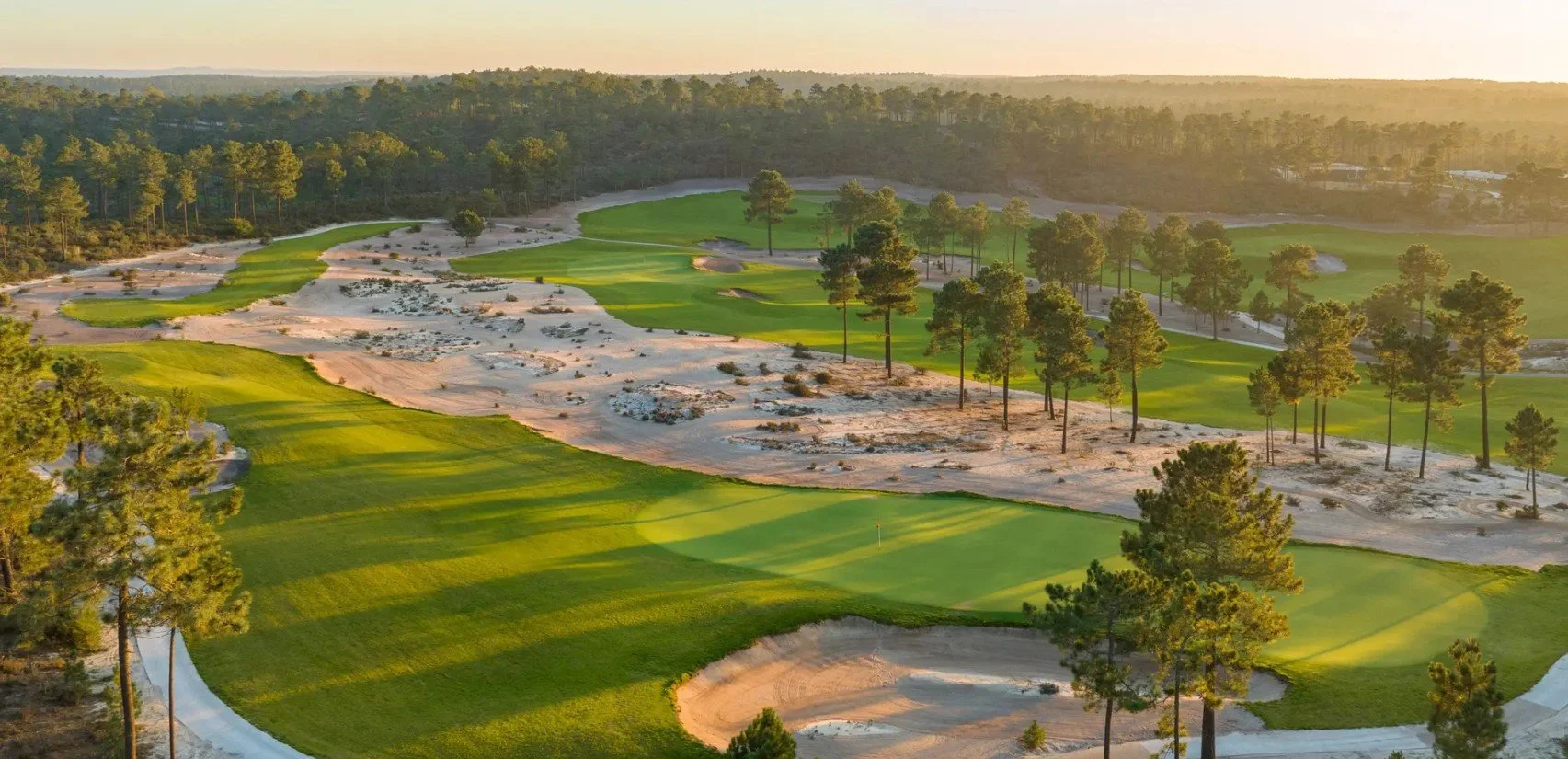
Terras da Comporta (Dunas)
Final Thoughts
Portugal isn't Spain's little brother in golf terms. It's its own destination with its own character. Whether you're drawn to the Algarve's established golf scene, Lisbon and the Silver Coast's combination of urban sophistication and dramatic coastal courses, or Comporta's secluded natural setting, Portugal delivers a complete golf vacation. And now that I've seen it myself, I'm comfortable recommending it with the same confidence I have for any market I know well.
